On the morning of October 6, 2026, former hedge fund manager and pharmaceutical executive Martin Shkreli shared an incisive autobiographical anecdote on X that cuts straight to the core of biotechnology market psychology:
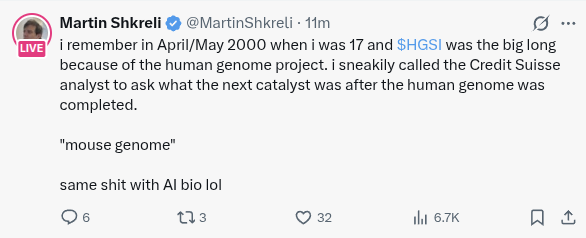
“i remember in April/May 2000 when i was 17 and $HGSI was the big long because of the human genome project. i sneakily called the Credit Suisse analyst to ask what the next catalyst was after the human genome was completed.
‘mouse genome’
same shit with AI bio lol” — Martin Shkreli (@MartinShkreli), October 6, 2026
For general market observers, the post reads like a punchy piece of financial humor. But for anyone who has traded biotechnology through multiple market cycles, managed clinical drug pipelines, or watched billions of venture capital evaporate into computational biology platforms, Shkreli’s observation hits a raw, structural nerve.
In four words—“mouse genome” / “same shit”—Shkreli outlines what may be the single most pervasive cognitive trap in modern life sciences investing: the chronic conflation of biological data collection with pharmacological therapeutics.
Did Shkreli’s phone call actually capture Wall Street consensus in the spring of 2000? What was the true fate of Human Genome Sciences ($HGSI) and the investors who bought the “Human Genome Project catalyst”? And in 2026, does the clinical reality of “AI Bio”—from Recursion Pharmaceuticals ($RXRX) and Exscientia to BenevolentAI—substantiate or refute his cynical analogy?
We conducted an exhaustive historical, regulatory, and clinical trial investigation to determine whether Shkreli’s thesis has solid ground to stand on.
1. The Historical Anatomy: April 2000, $HGSI, and the Credit Suisse Call
To evaluate Shkreli’s analogy, one must first revisit the extraordinary speculative frenzy of the Genomics Bubble of 1999–2000.
┌─────────────────────────────────────────────────────────────────────────────────────────────────┐
│                     THE 2000 GENOMICS BUBBLE VS. THE 2026 AI BIO HYPE CYCLE                     │
├────────────────────────┬───────────────────────────────────┬────────────────────────────────────┤
│ Dimension              │ 2000 Genomics Era ($HGSI, $CRA)   │ 2020–2026 AI Bio Era ($RXRX, $EXAI)│
├────────────────────────┼───────────────────────────────────┼────────────────────────────────────┤
│ Breakthrough Narrative │ Sequencing the human genetic code │ Machine learning predicting 3D     │
│                        │ unlocks the "blueprint of life."  │ structures & generative molecules. │
├────────────────────────┼───────────────────────────────────┼────────────────────────────────────┤
│ Prominent Symbols      │ Human Genome Sciences ($HGSI),    │ Recursion ($RXRX), Exscientia,     │
│                        │ Celera Genomics ($CRA), Incyte    │ Isomorphic Labs, Relay ($RLAY)     │
├────────────────────────┼───────────────────────────────────┼────────────────────────────────────┤
│ Peak Valuation Trigger │ Completion of Human Genome draft  │ AlphaFold releases, foundation     │
│                        │ (Clinton/Blair June 2000 address) │ models, generative protein design  │
├────────────────────────┼───────────────────────────────────┼────────────────────────────────────┤
│ The "Next Catalyst"    │ "The Mouse Genome"                │ "AlphaFold 3 / Virtual Cells /     │
│ Fallacy                │ (Sequencing more species)         │ Single-cell foundation models"     │
├────────────────────────┼───────────────────────────────────┼────────────────────────────────────┤
│ Biological Bottleneck  │ Target validation, in vivo ADMET, │ Target validation, in vivo ADMET,  │
│                        │ human clinical trial attrition    │ human clinical trial attrition     │
├────────────────────────┼───────────────────────────────────┼────────────────────────────────────┤
│ Ultimate Outcome       │ >90% valuation crash; 11-year     │ >80% valuation crash from peak;    │
│                        │ capital slog for single drug      │ lead Phase 2 assets axed           │
└────────────────────────┴───────────────────────────────────┴────────────────────────────────────┘
The 17-Year-Old Intern at Cramer Berkowitz
In the spring of 2000, Martin Shkreli was indeed 17 years old, working as an eager research intern at Cramer, Berkowitz & Co., the hedge fund run by Jim Cramer and Jeff Berkowitz. At that exact moment, the biotechnology sector was engulfed in a historic euphoria that dwarfed even the dot-com bubble.
The epicenter of that euphoria was Human Genome Sciences (NASDAQ: HGSI), co-founded in 1992 by genomics pioneer William Haseltine and Craig Venter.
Between late 1999 and March 2000, HGSI’s stock climbed into the stratosphere, touching an all-time peak of $232.75 per share (a market valuation exceeding $10 billion—an astronomical figure for an unprofitable biotech in 2000). Wall Street investment banks, spearheaded by Credit Suisse First Boston (CSFB), Lehman Brothers, and Morgan Stanley, published breathless research notes claiming that sequencing the human genome would instantly obsolete traditional drug discovery:
- Every disease-causing gene would be identified.
- Rational drug design would replace empirical trial-and-error.
- Thousands of novel targets would generate immediate pipelines of blockbuster therapeutics.
Why “Mouse Genome” Was So Telling
When Shkreli called the Credit Suisse analyst to ask what catalyst could possibly follow the historic completion of the human genetic blueprint, the analyst’s answer—“mouse genome”—was not an isolated joke; it was documented Wall Street strategy.
In mid-2000, CSFB and other major brokerages actively argued that while the human genome gave researchers the dictionary, the mouse genome was the critical functional catalyst. Because mice share approximately 85% of their protein-coding genes with humans, sequencing the mouse would enable comparative genomics, allowing knock-out experiments to establish gene function. Celera Genomics was racing to commercialize mouse genomic subscriptions to big pharma, and analysts treated the mouse genome sequence as a pivotal commercial event.
The absurdity, which 17-year-old Shkreli identified and which veteran drug developers knew all too well, was this:
Sequencing a genome is merely cataloging characters in an alphabet. It is not discovering a drug.
When an investment bank tells you that the next catalyst for a $10 billion company is sequencing another species’ DNA, it admits that there are no near-term clinical or revenue catalysts whatsoever.
2. The 11-Year Slog: What Actually Happened to $HGSI?
To understand why Shkreli draws this parallel to AI bio, one must trace the gruesome post-2000 reality of Human Genome Sciences.
Investors who bought HGSI in the spring of 2000 on the promise of the Human Genome Project did not achieve exponential returns. They walked into a decade-long financial slaughterhouse:
┌─────────────────────────────────────────────────────────────────────────────────────────────────┐
│                      HUMAN GENOME SCIENCES ($HGSI) 2000–2012 TIMELINE                           │
├───────────────┬─────────────────────────────────────────────────────────────────────────────────┤
│ March 2000    │ Stock peaks at $232.75 (> $10B market cap) on Human Genome Project euphoria.   │
├───────────────┼─────────────────────────────────────────────────────────────────────────────────┤
│ June 2000     │ Clinton & Blair announce working draft of human genome. Peak market hype.      │
├───────────────┼─────────────────────────────────────────────────────────────────────────────────┤
│ Dec 2002      │ Mouse genome draft published in Nature. HGSI stock has already collapsed >90%.  │
├───────────────┼─────────────────────────────────────────────────────────────────────────────────┤
│ 2004          │ Lead clinical asset Repifermin (KGF-2) fails Phase 2 in wound healing/colitis.  │
├───────────────┼─────────────────────────────────────────────────────────────────────────────────┤
│ 2005          │ LymphoStat-B (belimumab) FAILS primary endpoint in Phase 2 lupus trial.        │
├───────────────┼─────────────────────────────────────────────────────────────────────────────────┤
│ 2008–2009     │ HGSI trades down to ~$1.50 per share during financial crisis; near-insolvency. │
├───────────────┼─────────────────────────────────────────────────────────────────────────────────┤
│ March 2011    │ Benlysta (belimumab) approved by FDA—first new lupus drug in 50 years.          │
│               │ (11 full years after the 2000 bubble peak).                                     │
├───────────────┼─────────────────────────────────────────────────────────────────────────────────┤
│ July 2012     │ GlaxoSmithKline (GSK) acquires HGSI for $14.25/share ($3.6B)—a 94% drawdown    │
│               │ from its March 2000 all-time high.                                              │
└───────────────┴─────────────────────────────────────────────────────────────────────────────────┘
The Biology Meat Grinder
HGSI discovered that knowing a gene sequence did not bypass the brutal laws of pharmacology:
- Target Relevance: Just because a gene exists does not mean modulating its protein product cures disease in a living human.
- Clinical Failures: In 2004, HGSI suffered a major blow when its lead internally discovered candidate, Repifermin (keratinocyte growth factor-2), failed Phase 2 clinical trials for ulcerative colitis and mucositis, showing no statistically significant benefit over placebo.
- Safety Disasters: Its long-acting interferon candidate, Albuferon (albinterferon alfa-2b), co-developed with Novartis for Hepatitis C, was abandoned after severe pulmonary toxicities and adverse events derailed its regulatory path.
- Phase 2 Lupus Failure: In 2005, its primary antibody asset, LymphoStat-B (belimumab), failed its primary clinical endpoint in a 449-patient Phase 2 systemic lupus erythematosus (SLE) trial. It was only saved because retrospective subgroup analysis revealed clinical activity in serologically active patients, prompting HGSI to design the massive, expensive Phase 3 BLISS-52 and BLISS-76 trials.
The Financial Outcome
It took 11 years, several dilutive equity raises, and billions of dollars of burned capital before HGSI finally secured FDA approval for Benlysta in March 2011.
And what was the reward for public investors who bought into the 2000 genomic narrative? In 2012, GlaxoSmithKline acquired HGSI in a hostile takeover for $14.25 per share ($3.6 billion). Anyone who held HGSI from the peak of the genomics euphoria suffered an irreversible ~94% loss of capital, even though HGSI was one of the microscopic fraction of genomics biotechs that actually succeeded in bringing a novel biologic to market!
3. The “Catalyst Substitution” Playbook in 2026 AI Bio
Now, examine Martin Shkreli’s punchline: “same shit with AI bio lol.”
Why is the modern TechBio / AI drug discovery market an exact structural mirror of the HGSI phenomenon? Because the industry has once again replaced clinical milestones with computational milestones.
                   THE PARALLEL CYCLES OF CATALYST SUBSTITUTION

         2000 GENOMICS CYCLE                         2020–2026 AI BIO CYCLE
  ─────────────────────────────────            ─────────────────────────────────
  Human Genome Draft Completed (2000)          AlphaFold 2 Solves Folding (2020)
                 │                                            │
                 ▼                                            ▼
  "What's the next catalyst?"                  "What's the next catalyst?"
  "Mouse Genome!" (2002)                       "200M Predicted Structures!" (2022)
                 │                                            │
                 ▼                                            ▼
  "What's the next catalyst?"                  "What's the next catalyst?"
  "Rat Genome / SNP Haplotype Maps!"           "RFdiffusion Generative Binders!" (2023)
                 │                                            │
                 ▼                                            ▼
  "What's the next catalyst?"                  "What's the next catalyst?"
  "Functional Proteomics Catalog!"             "AlphaFold 3 / ESM3 Foundation Models!"
                 │                                            │
                 ▼                                            ▼
  THE CLINICAL CLIFF (2004–2009)               THE CLINICAL CLIFF (2024–2026)
  • Repifermin fails Phase 2                   • REC-994 fails Phase 2 (CCM)
  • LymphoStat-B misses Phase 2                • DSP-1181 axed in Phase 1
  • Albuferon scrapped for toxicity            • BEN-2293 fails Phase 2a
  • 95% equity drawdowns                       • Pure-play stocks collapse 80-95%
The New “Mouse Genomes” of AI
Observe the promotional narrative of AI drug discovery over the past five years:
- In 2020, DeepMind announced AlphaFold 2 had solved the 50-year-old protein folding problem. Tech evangelists proclaimed that drug discovery would now become like writing software.
- When investors asked, “Where are the approved drugs?”, the next catalyst was promised: AlphaFold’s database of 200 million structures.
- When 200 million structures failed to generate approved therapies, the next catalyst was: Generative diffusion models (RFdiffusion, Chroma) for de novo binder design.
- When de novo binders hit pharmacological walls, the next catalyst was: AlphaFold 3 (co-folding proteins with DNA, RNA, and small-molecule ligands).
- And in 2025–2026, when asked what will validate the billions spent on NVIDIA GPU clusters, what is the new catalyst? “Single-cell foundation models” and “The Virtual Cell.”
Every single one of these announcements is the modern equivalent of the mouse genome: a magnificent, intellectually dazzling scientific data milestone that venture capitalists and stock promoters market as an imminent commercial drug development catalyst.
4. Empirical Clinical Audit: What Has AI Bio Actually Delivered?
To verify whether Shkreli’s skepticism is grounded in facts, we investigated the actual clinical track record of every major AI-first drug discovery company that advanced candidates into human trials.
The empirical data across the sector from 2020 to late 2026 reveals a stark reality:
┌─────────────────────────────────────────────────────────────────────────────────────────────────┐
│                    CLINICAL ATTRITION AUDIT OF PROMINENT AI-BIO ASSETS                          │
├───────────────────┬──────────────┬────────────────────────────┬─────────────────────────────────┤
│ Company           │ Asset ID     │ Target / Indication        │ Real-World Clinical Outcome     │
├───────────────────┼──────────────┼────────────────────────────┼─────────────────────────────────┤
│ Recursion ($RXRX) │ REC-994      │ Superoxide / CCM           │ FAILED Phase 2 efficacy in      │
│                   │              │ (Cerebral Cavernous Malf.) │ SYCAMORE trial; AXED May 2025.  │
├───────────────────┼──────────────┼────────────────────────────┼─────────────────────────────────┤
│ Recursion ($RXRX) │ REC-2282     │ Pan-HDAC / NF2 Meningioma  │ TERMINATED during portfolio     │
│                   │              │                            │ restructuring (May 2025).       │
├───────────────────┼──────────────┼────────────────────────────┼─────────────────────────────────┤
│ Exscientia        │ DSP-1181     │ 5-HT1A agonist / OCD       │ DISCONTINUED in Phase 1 by      │
│ (Merged w/ RXRX)  │              │ (First "AI drug" in clinic)│ Sumitomo; failed criteria.      │
├───────────────────┼──────────────┼────────────────────────────┼─────────────────────────────────┤
│ Exscientia        │ EXS-21546    │ A2A receptor antagonist /  │ TERMINATED due to poor clinical │
│ (Merged w/ RXRX)  │              │ Immuno-oncology            │ tolerability/risk-benefit ratio.│
├───────────────────┼──────────────┼────────────────────────────┼─────────────────────────────────┤
│ BenevolentAI      │ BEN-2293     │ Pan-Trk inhibitor /        │ FAILED Phase 2a primary &       │
│ ($BAI)            │              │ Atopic Dermatitis          │ secondary endpoints (Apr 2023). │
├───────────────────┼──────────────┼────────────────────────────┼─────────────────────────────────┤
│ Schrödinger       │ SGR-2921     │ CDC7 inhibitor /           │ TERMINATED in 2024 due to       │
│ ($SDGR)           │              │ AML / MDS                  │ clinical profile / toxicology.  │
└───────────────────┴──────────────┴────────────────────────────┴─────────────────────────────────┘
1. Recursion Pharmaceuticals ($RXRX): The Collapse of the Lead Pipeline
Recursion was the premier public market bellwether for automated, AI-driven phenotypic discovery. Its BioHive supercomputers analyzed trillions of cellular images to identify drug candidates without needing target hypotheses.
In May 2025, Recursion underwent a devastating clinical reality check:
- It permanently discontinued REC-994, its most advanced clinical candidate, after the Phase 2 SYCAMORE trial failed to demonstrate statistically significant improvements in patient- or physician-reported efficacy. In mid-2026, Recursion offloaded the remaining assets to a patient advocacy foundation.
- It axed REC-2282 (for neurofibromatosis type 2) and REC-3964 (C. diff infection).
- In late 2024, it acquired its struggling competitor Exscientia in an all-stock deal valued at $688 million—a discount of over 80% from Exscientia’s peak valuation.
- Despite having marquee partnerships with NVIDIA, Roche, and Sanofi, Recursion’s stock trades at ~$4.50, down more than 85% from its post-IPO highs.
2. Exscientia ($EXAI): The Pioneer Swallowed at a Discount
Exscientia was the world’s first company to design a small molecule using generative AI that entered human clinical trials (DSP-1181, partnered with Sumitomo Dainippon Pharma).
- DSP-1181 failed: It was discontinued after Phase 1 because it failed to achieve benchmark criteria.
- EXS-21546 failed: Its proprietary A2A receptor antagonist for solid tumors was quietly shelved.
- After firing its founding CEO in early 2024 amid governance turmoil, Exscientia was forced into an all-stock acquisition by Recursion, validating Shkreli’s warning about venture capital valuations evaporating once drugs enter human testing.
3. BenevolentAI: The European Poster Child That Imploded
UK-based BenevolentAI was heralded as a national champion, raising hundreds of millions to predict novel drug targets using natural language processing and biomedical knowledge graphs.
- In April 2023, its lead asset BEN-2293 (a topical pan-Trk inhibitor for atopic dermatitis) failed both its primary and secondary efficacy endpoints in Phase 2a.
- The company’s stock crashed by over 90%, it laid off the majority of its staff, and it abandoned internal clinical development to retreat into licensing.
5. The Scientific Reality: Why AI Doesn’t Solve Eroom’s Law
Why is Phase 2 proving just as lethal for AI-designed molecules as it was for traditional molecules?
Comprehensive meta-analyses published by the Boston Consulting Group (BCG) in Drug Discovery Today (2024) and recent retrospective perspectives in Nature Reviews Drug Discovery (2026) confirm a vital empirical finding:
┌─────────────────────────────────────────────────────────────────────────────────────────────────┐
│                   CLINICAL TRIAL SUCCESS RATES: AI-DESIGNED VS. HISTORICAL BASELINE             │
├─────────────────────────┬──────────────────────┬──────────────────────┬─────────────────────────┤
│ Clinical Stage          │ Historical Baseline  │ AI-Discovered Drugs  │ Clinical Significance   │
├─────────────────────────┼──────────────────────┼──────────────────────┼─────────────────────────┤
│ Phase 1 (Safety / PK)   │ 65% – 75%            │ 80% – 90%            │ MODEST IMPROVEMENT:     │
│                         │                      │                      │ Good at avoiding overt  │
│                         │                      │                      │ chemical toxicophores.  │
├─────────────────────────┼──────────────────────┼──────────────────────┼─────────────────────────┤
│ Phase 2 (Proof of       │ 35% – 40%            │ ~ 40%                │ ZERO IMPROVEMENT:       │
│ Concept / Efficacy)     │                      │                      │ Target biology remains  │
│                         │                      │                      │ the primary failure.    │
├─────────────────────────┼──────────────────────┼──────────────────────┼─────────────────────────┤
│ Phase 3 (Pivotal Trial) │ 55% – 60%            │ Insufficient Data /  │ NO DE NOVO AI DRUG HAS  │
│                         │                      │ Unproven             │ YET CLEARED PIVOTAL P3  │
└─────────────────────────┴──────────────────────┴──────────────────────┴─────────────────────────┘
These numbers explain the crux of Shkreli’s insight:
The “Hit-to-Lead” Illusion
AI has proven to be extraordinarily effective at lead generation and molecular property optimization (making a small molecule bind to a predefined pocket with high nanomolar affinity, good aqueous solubility, and low microsomal clearance). That is why Phase 1 pass rates are 80-90%.
However, Lead Optimization represents only ~10% to 15% of the total cost and time of drug development.
The “Target Biology” Wall
The reason 60% of all drug candidates die in Phase 2 is not because medicinal chemists were bad at synthesizing molecules. They die because the biological hypothesis was wrong in living human patients.
- Disease biology is non-linear, redundant, and polygenic.
- Blocking Target X in vitro or in a simplified mouse model often causes human cancer cells or inflammatory cascades to simply upregulate Pathway Y.
- Predicting the 3D static structure of a protein does not tell you whether that protein is a clinically disease-modifying target in a 65-year-old human with comorbidities.
Just as the Human Genome Project could not tell William Haseltine whether Repifermin would heal mucosal ulcers in humans, AlphaFold 3 cannot tell Recursion whether modulating a kinase will halt human tumor progression without lethal liver toxicity.
6. The Verdict: Do We Agree or Disagree with Martin Shkreli?
Having completed this forensic audit, we can now answer the core question: Does Martin Shkreli’s comment have ground to stand on, and do we agree or disagree?
Our verdict is nuanced: Shkreli is 100% correct regarding market valuation, catalyst substitution, and near-term clinical reality. However, his cynicism risks falling into the “Amara’s Law” fallacy regarding the long-term arc of biological technology.
┌─────────────────────────────────────────────────────────────────────────────────────────────────┐
│                           INDEPENDENT VERDICT ON SHKRELI'S HGSI ANALOGY                         │
├──────────────────────────────────────────────────────┬──────────────────────────────────────────┤
│ Where Shkreli Is 100% CORRECT (The Market Reality)   │ Where Shkreli Is TOO CYNICAL (The Science│
├──────────────────────────────────────────────────────┼──────────────────────────────────────────┤
│ 1. Catalyst Substitution: Computational benchmarks   │ 1. Amara's Law: We overestimate tech in  │
│    ("Virtual Cell") are sold as clinical catalysts.  │    the short run, underestimate in long. │
│                                                      │                                          │
│ 2. Multiple Compression: Pure-play AI biotechs       │ 2. The HGP Didn't Fail: HGP became the   │
│    inevitably crater from SaaS multiples to biotech. │    bedrock of modern targeted oncology.  │
│                                                      │                                          │
│ 3. Phase 2 Meat Grinder: In silico design does not   │ 3. Essential Infrastructure: Generative  │
│    bypass human clinical efficacy attrition.         │    biology is becoming standard tooling. │
└──────────────────────────────────────────────────────┴──────────────────────────────────────────┘
Where We Agree with Shkreli
- The “Catalyst” Illusion is Real: Investors who buy AI-bio platform companies on the anticipation of model upgrades, database releases, or compute partnerships are repeating the mistake of the 2000 Credit Suisse analyst. A new neural network architecture is not a drug, just as the mouse genome was not a drug.
- Pure-Play Platform Biotechs Are Structural Traps: Companies that position themselves as “tech platforms” to capture high revenue multiples inevitably collide with the capital requirements of drug development. When they are forced to spend $100M+ per Phase 2 trial, their multiples collapse to traditional biotech levels or below cash value.
- Target Validation Remains Unsolved by AI: Until machine learning can model systemic, dynamic human physiology, clinical failure rates will not collapse. Shkreli’s assertion that AI bio is following the exact trajectory of 2000-era genomics is historically and statistically unassailable.
Where We Disagree with Shkreli
- The Human Genome Project Was Ultimately a Triumph:
While HGSI as a stock was a disaster for bubble buyers, the Human Genome Project itself was one of the greatest scientific accomplishments in human history.
Without the HGP, the world would not have:
- Targeted kinase inhibitors (Gleevec, Tagrisso, Tarceva).
- Immuno-oncology biomarkers (MSI-high, PD-L1 expression, tumor mutational burden).
- Next-Generation Sequencing (NGS) and liquid biopsies (Illumina, Foundation Medicine).
- CRISPR/Cas9 gene-editing medicines (Casgevy).
- mRNA vaccines (BioNTech, Moderna). The problem was not the science; the problem was the time horizon. The commercial payoff took 15 to 20 years, whereas Wall Street expected it in 18 months.
- AI Bio Will Become Table Stakes, Not Zero:
AI bio is not going to zero. Instead, it is undergoing the classic transition from overhyped speculative theme to ubiquitous industry utility.
- Generative protein design (RFdiffusion, ESM3) is already slashing the time required to design custom nanobodies, bispecific antibodies, and industrial enzymes from months to days.
- Cryo-EM and structural biology workflows have been permanently accelerated by AlphaFold.
- The primary beneficiaries will not be cash-burning “AI-first” biotechs; they will be well-capitalized, fully integrated biopharma giants (Eli Lilly, Novartis, AstraZeneca, Roche) that integrate these computational tools into their vast wet-lab infrastructure and global clinical trial networks.
7. The Investor’s Playbook: How to Navigate AI Bio in 2026
Martin Shkreli’s anecdote about the Credit Suisse analyst and the “mouse genome” serves as an invaluable mental model for biotechnology investors today.
When analyzing any “TechBio” or “AI drug discovery” company, apply this three-part filter:
- Beware the “Next Model” Catalyst: If management’s upcoming catalyst is a new foundation model, a larger GPU cluster, or a single-cell dataset, recognize it for what it is: a research milestone, not a clinical catalyst. Do not pay clinical valuations for in silico tools.
- Scrutinize Target Selection Over Molecular Elegance: Do not ask whether the AI designed a molecule with picomolar binding affinity. Ask: Has this target been genetically validated in humans? What is the clinical proof-of-concept? What happens to the patient when this pathway is inhibited?
- Invest in the Pick-and-Shovel Infrastructure or the Integrated Giants: If you want exposure to AI in life sciences, avoid pre-revenue platform biotechs facing the Phase 2 meat grinder. Focus on the profitable toolmakers supplying the physical consumables (high-throughput sequencing, synthesis, automated liquid handlers) or the pharmaceutical powerhouses that have the balance sheet to survive Phase 2 attrition and turn machine learning into approved, revenue-generating medicines.
When the next analyst tells you that the next big stock catalyst is the “Virtual Cell”—remember Martin Shkreli calling Credit Suisse in May 2000, and remember the “mouse genome.”