On October 9, 2026, as Moderna, Inc. (NASDAQ: MRNA) surged +12.18% intraday to break past $220.99—pushing the biotechnology company to an eye-watering $88.2 billion market capitalization—former hedge fund manager and biotech analyst Martin Shkreli issued a provocative, high-conviction macro call:
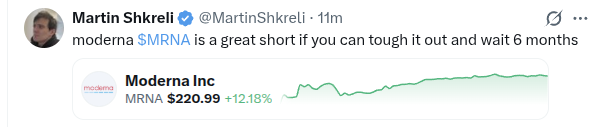
“moderna $MRNA is a great short if you can tough it out and wait 6 months”
— Martin Shkreli (@MartinShkreli), October 9, 2026
This proclamation arrives after one of the most violent short squeezes in modern biotech history.
Back in August 2026, Shkreli publicly admitted on his video livestreams that he was “playing around” with a short position in Moderna at $80 per share. At the time, Wall Street had largely abandoned Moderna’s post-pandemic turnaround: quarterly revenue had collapsed to just $145 million, GAAP quarterly net losses exceeded -$800 million, and the commercial rollout of its second commercial product—the RSV vaccine mRESVIA—was getting soundly beaten by GlaxoSmithKline’s Arexvy and Pfizer’s Abrysvo.
Then, lightning struck. On August 19, 2026, Merck & Co. and Moderna stunned the biopharma world by releasing positive topline Phase 3 data for their individualized neoantigen therapy (INT) intismeran autogene (mRNA-4157 / V940) combined with Keytruda in high-risk resected melanoma (INTerpath-001).
In an explosive multi-week run, Moderna shares surged +177%, adding more than $56 billion in market capitalization and catching short sellers completely off guard. Shkreli conceded the brutal squeeze on his stream with typical bluntness: “I bet you a bunch of people got fired today all across the Street. You don’t even, you know what’s going on, you just leave the building, bro.”
Yet today, with the stock trading at $220.99, Shkreli is not throwing in the towel. Instead, he is doubling down on the short side, specifying an exact timeframe: “if you can tough it out and wait 6 months.”
Is Shkreli stubborn, or does his 6-month thesis expose an insurmountable valuation bubble detached from clinical timelines, manufacturing realities, and corporate cash burn?
In this forensic research investigation, we audit:
- The Phase 3 INTerpath-001 Data: Clinical breakthrough vs. unrevealed hazard ratios and real-world melanoma market sizing.
- The Bespoke Manufacturing Bottleneck: The staggering difference between batch mRNA vaccines and 6–8 week autologous neoantigen synthesis.
- The Merck 50/50 Profit Split: Why Moderna only keeps half the economics.
- The 6-Month Catalyst Vacuum: Why the next two quarters (Q3 and Q4 2026) will confront investors with grim COVID/RSV revenues and persistent -$800M quarterly burns.
- The Impending Equity Dilution: Why management has an urgent fiduciary incentive to execute an At-The-Market (ATM) or secondary equity offering at $200+.
- Sum-of-the-Parts (SOTP) Valuation: Modeling why fair value sits at $95.00 – $115.00 (-48% to -57% downside).
┌────────────────────────────────────────────────────────────────────────────────────────────────────────┐
│                        MODERNA ($MRNA) AT $220.99: INSTITUTIONAL FORENSIC AUDIT                        │
├───────────────────────────────┬──────────────────────────────────┬─────────────────────────────────────┤
│ Metric / Dimension            │ Squeeze Euphoria Narrative       │ Forensic Institutional Reality      │
├───────────────────────────────┼──────────────────────────────────┼─────────────────────────────────────┤
│ Market Capitalization         │ $88.23B (Universal cancer cure)  │ Q2 2026 Revenue: $145M; P/S > 48x   │
├───────────────────────────────┼──────────────────────────────────┼─────────────────────────────────────┤
│ Net Cash Burn                 │ $6.9B cash = "fortress runway"   │ Burning ~$2.0B-$2.5B annually;      │
│                               │                                  │ Guided to $4.7B-$5.2B by end-2026   │
├───────────────────────────────┼──────────────────────────────────┼─────────────────────────────────────┤
│ Phase 3 INTerpath-001 TAM     │ "Tens of billions in melanoma"   │ High-Risk Resected Melanoma is      │
│                               │                                  │ ~40K-50K pts US/EU; TAM: ~$2.5B     │
├───────────────────────────────┼──────────────────────────────────┼─────────────────────────────────────┤
│ Commercial Deal Structure     │ 100% credited to MRNA valuation  │ 50/50 Global Profit & Loss Split    │
│                               │                                  │ with Merck & Co. (MRK)              │
├───────────────────────────────┼──────────────────────────────────┼─────────────────────────────────────┤
│ Manufacturing Scalability     │ "Mass-market mRNA production"    │ Bespoke autologous therapy; TAT:    │
│                               │                                  │ 6-8 weeks; COGS: $35K-$50K/pt       │
├───────────────────────────────┼──────────────────────────────────┼─────────────────────────────────────┤
│ Commercial Revenue Horizon    │ "Imminent cancer vaccine sales"  │ Zero cancer revenues for 12-18 mos; │
│                               │                                  │ Launch delayed to late 2027/2028    │
├───────────────────────────────┼──────────────────────────────────┼─────────────────────────────────────┤
│ Near-Term P&L Drivers         │ Oncology hype                    │ Q3/Q4 2026 respiratory vaccine      │
│                               │                                  │ sales collapsing; big losses ahead  │
├───────────────────────────────┼──────────────────────────────────┼─────────────────────────────────────┤
│ Dilution Risk                 │ Ignored                          │ Prime candidate for $2B-$3B ATM     │
│                               │                                  │ secondary offering into strength    │
├───────────────────────────────┼──────────────────────────────────┼─────────────────────────────────────┤
│ Institutional Fair Value      │ $220.99 (Spot Price)             │ $95.00 - $115.00 (-48% to -57%)     │
└───────────────────────────────┴──────────────────────────────────┴─────────────────────────────────────┘
1. What Did INTerpath-001 Actually Prove?
On August 19, 2026, Merck and Moderna announced topline results from the Phase 3 INTerpath-001 trial (NCT05933577).
The trial evaluated intismeran autogene (mRNA-4157 / V940) combined with Keytruda (pembrolizumab) versus Keytruda alone in 1,137 patients with completely resected Stage IIB–IV cutaneous melanoma.
The Scientific Breakthrough
The trial met its primary endpoint of Recurrence-Free Survival (RFS) and key secondary endpoint of Distant Metastasis-Free Survival (DMFS) with statistical significance.
This is indisputably a landmark scientific milestone: it is the first-ever Phase 3 trial in human medical history to demonstrate efficacy for an individualized mRNA cancer vaccine, and the first regimen to demonstrate additive benefit over Keytruda monotherapy in the adjuvant melanoma setting.
                  INTERPATH-001 CLINICAL WORKFLOW

  [ Patient Surgical Resection ] (Completely resected Stage IIB-IV Melanoma)
                │
                ▼
  [ Whole-Exome Sequencing (WES) ] (Tumor vs. Healthy Tissue Genomic Audit)
                │
                ▼
  [ AI Neoantigen Epitope Selection ] (Algorithm selects up to 34 neoantigens)
                │
                ▼
  [ Bespoke mRNA-4157 Manufacturing ] (Single-patient cleanroom synthesis: 6-8 WEEKS)
                │
                ▼
  [ Adjuvant Administration ]
      ├── mRNA-4157 (1 mg IM every 3 weeks for up to 9 doses)
      └── KEYTRUDA (200 mg IV every 3 weeks for up to 18 cycles)
The Unreported Nuances: What the Topline PR Concealed
While algorithms bought the headline, biotech specialists immediately noticed what was omitted from the press release:
- No Hazard Ratios (HR) or Kaplan-Meier Curves Disclosed: Merck and Moderna did not release the exact hazard ratios for RFS or DMFS. In the earlier Phase 2b KEYNOTE-942 study (157 patients), the RFS hazard ratio was 0.51 (a 49% risk reduction). However, Phase 3 trials almost universally demonstrate regression to the mean. If the Phase 3 HR settles in the 0.65–0.72 range, it remains a genuine clinical approval candidate, but falls significantly short of the curative rhetoric propelling retail mania.
- Immature Overall Survival (OS): The trial will continue to follow patients for overall survival. In melanoma, recurrence-free survival does not always translate into a statistically significant overall survival benefit, particularly given modern salvage treatments (checkpoint re-challenge, BRAF/MEK inhibitors, tumor-infiltrating lymphocytes / TILs).
- Subgroup Heterogeneity: Historically, neoantigen therapies perform drastically better in patients with high Tumor Mutational Burden (TMB) or PD-L1 positive tumors. When full data is revealed at medical congresses (ESMO or SMR), any indication that efficacy is concentrated primarily in biomarker-high sub-cohorts will dramatically shrink the addressable commercial population.
2. The Commercial Reality: Sizing the Melanoma Market & The 50/50 Merck Cut
The most glaring flaw in the current $88 billion valuation is the complete failure of market participants to perform basic epidemiology and revenue modeling.
Between August and October 2026, Moderna’s market capitalization expanded by $56.3 billion (from ~$31.9B to ~$88.2B). Can adjuvant melanoma support this?
The Epidemiological Funnel
┌─────────────────────────────────────────────────────────────────────────────┐
│                 ADJUVANT MELANOMA EPIDEMIOLOGICAL MARKET FUNNEL             │
├──────────────────────────────────────────┬──────────────────────────────────┤
│ Metric Level                             │ Patient Count / Annual Pool      │
├──────────────────────────────────────────┼──────────────────────────────────┤
│ Total Incident Melanoma (US + EU5)       │ ~200,000 patients                │
│ Stage IIB - IV Resected Candidates       │ ~45,000 patients                 │
│ Clinically Fit for Systemic Adjuvant Tx  │ ~30,000 patients                 │
│ Biopsy / Sequencing Success Rate (85%)   │ ~25,500 patients                 │
│ Peak INT Market Penetration (Generous 45%)│ ~11,500 patients                 │
└──────────────────────────────────────────┴──────────────────────────────────┘- Addressable High-Risk Pool: There are approximately 40,000 to 50,000 Stage IIB–IV completely resected melanoma patients diagnosed annually across the United States and major European markets.
- Drop-Off Rates: In real-world clinical practice, only ~30,000 of these patients receive systemic adjuvant immunotherapy due to comorbidities, toxicities, or physician preference. Furthermore, tumor biopsy quality, sequencing failures, and manufacturing turnaround issues inevitably drop another 10%–15% of patients.
- Peak Adoption: Even assuming an aggressive 45% market penetration, the annual patient volume for intismeran autogene is approximately 11,500 patients worldwide.
- Net Realized Price Per Course: While Moderna and Merck may seek a list price exceeding $250,000, mandatory commercial payer rebates, Medicaid statutories, and European national health single-payer pricing (NICE, G-BA) will bring the net realized worldwide price per complete 9-dose course to approximately $150,000.
- Gross Worldwide Market Revenue: $$\text{11,500 patients} \times $150,000 = $1.725\text{ Billion / year}$$
The 50/50 Merck Deal Structure
Crucially, Moderna does not own intismeran autogene outright. Under the terms of the worldwide collaboration agreement with Merck:
- Development costs and commercial net profits are split 50/50 globally.
- Moderna’s net annual revenue share from peak melanoma sales will be: $$$1.725\text{ Billion} \times 50% = \mathbf{$862.5\text{ Million / year}}$$
Even in an ultra-optimistic scenario with 60% penetration and $180,000 net pricing, Moderna’s annual melanoma revenue caps at $1.35 billion.
The Mathematical Absurdity: The equity market added $56.3 billion in market capitalization for an asset that, at peak maturity in 2029, will generate approximately $900 million to $1.2 billion in annual net revenue to Moderna. That represents an implied valuation multiple of 47x to 62x peak sales for a single indication.
3. The Operational Nightmare: Bespoke Manufacturing & COGS
Investors pricing Moderna as if it can produce cancer vaccines like COVID-19 shots fundamentally misunderstand bioprocess engineering.
┌───────────────────────────────────────────────────────────────────────────────────┐
│              MASS VACCINE (SPIKEVAX) vs. INDIVIDUALIZED ONCOLOGY (V940)           │
├─────────────────────────┬──────────────────────────┬──────────────────────────────┤
│ Attribute               │ Spikevax (COVID-19)      │ Intismeran Autogene (V940)   │
├─────────────────────────┼──────────────────────────┼──────────────────────────────┤
│ Product Nature          │ One-size-fits-all        │ Autologous, patient-specific │
│ Target Antigens         │ 1 (Spike glycoprotein)   │ Up to 34 unique neoantigens  │
│ Manufacturing Lead Time │ Bulk vats on shelf       │ 6 to 8 Weeks from biopsy     │
│ Batch Size              │ Millions of doses/run    │ 1 Patient = 1 Batch          │
│ Cost of Goods (COGS)    │ ~$3 - $5 per dose        │ $35,000 - $50,000 per course │
│ Gross Margin Profile    │ 75% - 85%                │ 40% - 55%                    │
│ Scalability             │ Exponentially scalable   │ Linear cleanroom constraint  │
└─────────────────────────┴──────────────────────────┴──────────────────────────────┘- The 6–8 Week Turnaround Delay: In high-risk melanoma, microscopic cancer cells are dividing rapidly. Requiring 45 to 60 days to complete biopsy processing, exome sequencing, epitope ranking, plasmid synthesis, IVT mRNA transcription, LNP formulation, and sterility testing creates significant clinical friction. Patients who recur or develop distant metastases during the manufacturing window are automatically removed from adjuvant therapy.
- Crippling Cost of Goods Sold (COGS): Individualized autologous manufacturing cannot benefit from the standard batch economies of scale that define pharmaceutical profitability. Each batch requires dedicated technician hours, bespoke quality control, individual sterility assays, and single-use consumables. Industry estimates place the COGS for a 9-dose individualized mRNA regimen at $35,000 to $50,000 per patient.
- Depressed Gross Margins: While Spikevax generated gross margins north of 80%, intismeran autogene’s gross margins will struggle to exceed 45% to 55%. After accounting for the 50/50 profit split with Merck and internal operational overhead, Moderna’s net operating margin on the therapy will be far lower than traditional biopharma blockbusters.
4. Deconstructing Shkreli’s 6-Month Timeline: The Catalyst Vacuum
Why did Martin Shkreli specifically say “a great short if you can tough it out and wait 6 months”?
Understanding this timing is the difference between an amateur short seller blowing up their account and an institutional fund harvesting alpha.
┌────────────────────────────────────────────────────────────────────────────────────────┐
│                      THE 6-MONTH CATALYST VACUUM TIMELINE (OCT 2026 - APR 2027)        │
├──────────────────────┬─────────────────────────────────────────────────────────────────┤
│ Month                │ Macro Event & Fundamental Headwind                              │
├──────────────────────┼─────────────────────────────────────────────────────────────────┤
│ October 2026         │ Peak Squeeze Euphoria: MRNA hits $220.99; retail and momentum   │
│                      │ algorithms dominate tape; borrow fees remain elevated.          │
├──────────────────────┼─────────────────────────────────────────────────────────────────┤
│ November 2026        │ Q3 2026 Earnings Reality Check: Dismal COVID/RSV sales;         │
│                      │ GAAP net loss expected at -$700M to -$800M; cash burns lower.   │
├──────────────────────┼─────────────────────────────────────────────────────────────────┤
│ Dec 2026 / Jan 2027  │ Medical Congress Presentation: Full INTerpath-001 data revealed │
│                      │ (ESMO/SMR); actual HRs, subgroup data, and nuances temper hype. │
├──────────────────────┼─────────────────────────────────────────────────────────────────┤
│ Jan / Feb 2027       │ Equity Offering / ATM Dilution: Management executes $2B-$3B     │
│                      │ secondary offering to take advantage of multi-year high stock.  │
├──────────────────────┼─────────────────────────────────────────────────────────────────┤
│ Feb / Mar 2027       │ Q4 2026 Full-Year Earnings: Year-end cash confirmed at ~$4.8B;  │
│                      │ FY2026 net loss exceeding -$2.5B; 2027 guidance remains bleak.  │
├──────────────────────┼─────────────────────────────────────────────────────────────────┤
│ April 2027           │ 6-Month Horizon Reached: Zero commercial cancer sales; BLA      │
│                      │ under standard/priority FDA review; stock re-rates to $95-$115. │
└──────────────────────┴─────────────────────────────────────────────────────────────────┘
Pillar 1: Why You Must “Tough It Out”
Shorting into the immediate aftermath of a Phase 3 cancer breakthrough is notoriously hazardous:
- Borrow Rates & Short Squeezes: When retail traders and momentum funds pile into a heavily shorted biotech stock, borrow fees jump and gamma squeezes force brokerages to buy-in short sellers.
- Narrative Dominance: Mainstream media broadcasts simplified headlines (“Cancer Vaccine Breakthrough!”). Nuanced pharmacological analysis is ignored during the initial emotional stampede. Traders without sufficient margin cushion or downside discipline get wiped out before the fundamentals catch up.
Pillar 2: Why 6 Months Guarantees Fundamental Gravity
Over a 6-month horizon (October 2026 to April 2027), the market is forced to confront the harsh reality of Moderna’s corporate financials:
- Zero Oncology Revenue for 12–18 Months:
- Although Phase 3 topline data is out, filing a complex Biologics License Application (BLA) containing bespoke manufacturing validation takes several months (late Q4 2026 or early Q1 2027).
- Even if granted FDA Priority Review (6 months), regulatory review and inspection of the manufacturing facilities means commercial approval cannot occur before mid-to-late 2027.
- During the entire 6-month window identified by Shkreli, Moderna will record exactly $0.00 in cancer vaccine revenue.
- Disastrous Q3 and Q4 2026 Financial Results:
- In Q2 2026, Moderna generated a meager $145 million in revenue and posted a -$800 million GAAP net loss (SEC Form 10-Q).
- In Q3 2026 (November) and Q4 2026 (February 2027), Moderna must report fall respiratory vaccine numbers.
- COVID-19 booster fatigue is at an all-time high; Spikevax revenues continue to decline year-over-year.
- mRESVIA has captured less than 10% of the RSV market, hampered by CDC/ACIP recommendation narrowing and aggressive discounting by GSK and Pfizer.
- Investors will be repeatedly reminded that Moderna is incinerating $500M to $800M in cash every single quarter.
- The Dilution Trap ($2B–$3B Equity Offering):
- Moderna ended Q2 2026 with $6.9 billion in cash and investments, with management guiding year-end cash down to $4.7B–$5.2B.
- The company burns ~$2.0B to $2.5B per year. At this trajectory, Moderna has less than 24 months of operational runway before hitting minimum regulatory cash thresholds.
- Stéphane Bancel and Moderna’s board of directors understand biopharma finance. When a company burning $2B+ per year sees its stock explode by 177% on narrative euphoria, management invariably issues equity.
- Whether through an aggressive At-The-Market (ATM) facility or a formal $2.5B secondary public offering, new shares will be sold into the rally, instantly capping price appreciation and triggering heavy institutional selling.
5. Sum-of-the-Parts (SOTP) Valuation: What Is Moderna Actually Worth?
To determine an objective fair value for Moderna, we perform an institutional Sum-of-the-Parts (SOTP) discounted cash flow analysis across each business segment:
┌────────────────────────────────────────────────────────────────────────────────────────┐
│                        MODERNA ($MRNA) SOTP VALUATION BREAKDOWN                        │
├───────────────────────────────────┬──────────────┬──────────────┬──────────────────────┤
│ Franchise Component               │ Bear Value   │ Base Value   │ Bull Value           │
├───────────────────────────────────┼──────────────┼──────────────┼──────────────────────┤
│ 1. Endemic Respiratory Franchise  │ $8.0B        │ $11.0B       │ $14.0B               │
│    (Spikevax + mRESVIA + Flu P3)  │              │              │                      │
├───────────────────────────────────┼──────────────┼──────────────┼──────────────────────┤
│ 2. mRNA-4157 Melanoma (50% Split) │ $6.5B        │ $9.5B        │ $13.0B               │
│    (rNPV, 80% Approval Prob.)     │              │              │                      │
├───────────────────────────────────┼──────────────┼──────────────┼──────────────────────┤
│ 3. Pipeline Optionality           │ $8.0B        │ $12.5B       │ $18.0B               │
│    (NSCLC INT, CMV P3, Norovirus) │              │              │                      │
├───────────────────────────────────┼──────────────┼──────────────┼──────────────────────┤
│ 4. Net Cash (Projected YE 2026)   │ $4.7B        │ $5.0B        │ $5.2B                │
├───────────────────────────────────┼──────────────┼──────────────┼──────────────────────┤
│ Total Enterprise Equity Value     │ $27.2B       │ $38.0B       │ $50.2B               │
├───────────────────────────────────┼──────────────┼──────────────┼──────────────────────┤
│ Fully Diluted Shares Outstanding  │ 399.2M       │ 399.2M       │ 399.2M               │
├───────────────────────────────────┼──────────────┼──────────────┼──────────────────────┤
│ Fair Value Per Share              │ $68.14       │ $95.19       │ $125.75              │
├───────────────────────────────────┼──────────────┼──────────────┼──────────────────────┤
│ Current Trading Price             │ $220.99      │ $220.99      │ $220.99              │
├───────────────────────────────────┼──────────────┼──────────────┼──────────────────────┤
│ Expected Downside vs. Spot        │ -69.2%       │ -56.9%       │ -43.1%               │
└───────────────────────────────────┴──────────────┴──────────────┴──────────────────────┘
Valuation Audit
- Endemic Respiratory ($11.0B Base): Assumes Spikevax stabilizes at ~$1.5B annual sales, mRESVIA reaches ~$500M, and the Phase 3 influenza/COVID combination (mRNA-1083) adds modest incremental cash flow.
- mRNA-4157 Adjuvant Melanoma ($9.5B Base): Models an 80% probability of approval, peak gross worldwide sales of $2.0B, 50% split with Merck ($1.0B net to Moderna), 50% gross margins, and a 10% discount rate.
- Pipeline Optionality ($12.5B Base): Generously assigns $7.5B to INTerpath-002 in non-small cell lung cancer (NSCLC) at a 35% probability of success, plus $5.0B across Phase 3 CMV (mRNA-1647) and Norovirus (mRNA-1403).
- Net Balance Sheet Cash ($5.0B Base): Guided year-end 2026 cash balance.
The Valuation Reality: Even under an aggressive Bull Case that values the entire speculative pipeline at $18.0B and awards $13.0B to the melanoma franchise, Moderna’s intrinsic equity value is $125.75 per share.
At $220.99, the stock is trading at an unjustified +75% to +132% premium over its fundamental net present value.
6. How to Trade Shkreli’s Call: Strategy & Risk Management
For professional investors and market participants evaluating Shkreli’s short thesis, execution is critical.
┌────────────────────────────────────────────────────────────────────────────────────────┐
│                              SHORT IMPLEMENTATION PLAYBOOK                             │
├──────────────────────┬─────────────────────────────────────────────────────────────────┤
│ Vehicle              │ Tactical Execution & Rationale                                  │
├──────────────────────┼─────────────────────────────────────────────────────────────────┤
│ Direct Equity Short  │ HIGH RISK / CAUTION: Elevated borrow fees and violent intraday  │
│                      │ short covering spikes make direct shorting risky without deep   │
│                      │ capital reserves.                                               │
├──────────────────────┼─────────────────────────────────────────────────────────────────┤
│ Long Put Spreads     │ PREFERRED STRATEGY: Buying April 2027 or June 2027 $160 / $120  │
│ (6-Month Horizon)    │ Bear Put Spreads. Provides defined risk against temporary       │
│                      │ squeeze spikes to $250+ while capturing the full re-rating      │
│                      │ driven by Q3/Q4 earnings, dilution, and catalyst vacuum.        │
├──────────────────────┼─────────────────────────────────────────────────────────────────┤
│ Bear Call Spreads    │ INCOME / THETA STRATEGY: Selling OTM call spreads (e.g.,        │
│                      │ $260 / $300 strikes) expiring in early 2027 to capture implied  │
│                      │ volatility collapse as squeeze momentum stagnates.              │
└──────────────────────┴─────────────────────────────────────────────────────────────────┘
Key Risks to the Short Thesis (What Could Break the Trade?)
- Outright Acquisition by Merck: Facing the catastrophic loss of exclusivity (LOE) on Keytruda in 2028, Merck could theoretically decide to acquire Moderna outright to capture 100% of the INT franchise. However, given Moderna’s $88B market cap, an acquisition with a standard 30% premium would require Merck to pay over $115 billion—an improbable capital allocation for an asset burning $2B+ annually.
- Early Positive Phase 3 NSCLC Readout: If the Phase 3 INTerpath-002 trial in non-small cell lung cancer posts an unexpectedly early, overwhelmingly positive interim analysis, the addressable oncology market would expand tenfold, igniting another wave of algorithmic buying.
- FDA Accelerated Approval Surprise: If the FDA waives full review requirements and grants accelerated approval on interim data within 3–4 months without waiting for full advisory committee scrutiny.
7. Forensic Verdict: Strong Short / Tactical Underweight
Martin Shkreli’s initial short at $80 was an expensive lesson in the hazards of shorting clinical-stage binary biotech catalysts. But at $220.99, the investment calculus has inverted completely.
The Phase 3 INTerpath-001 trial is an undeniable triumph for mRNA biology, but the market has priced a 40,000-patient niche melanoma indication as if it were an immediate, mass-produced cure for all human cancers.
Over the next 6 months:
- Moderna will generate zero dollars from cancer vaccines.
- It will report hundreds of millions in quarterly operating losses.
- It faces an inevitable multi-billion-dollar equity dilution event.
- The full medical congress presentation will reveal real-world clinical nuances that sober market expectations.
Shkreli’s advice to “tough it out and wait 6 months” aligns with the cold mathematical realities of biotechnology finance. The current $88 billion market cap is an unsustainable narrative peak.
Institutional Stance: STRONG SELL / SHORT
6-Month Price Target: $95.00 – $115.00
Downside Potential: -48% to -57%